What was reported
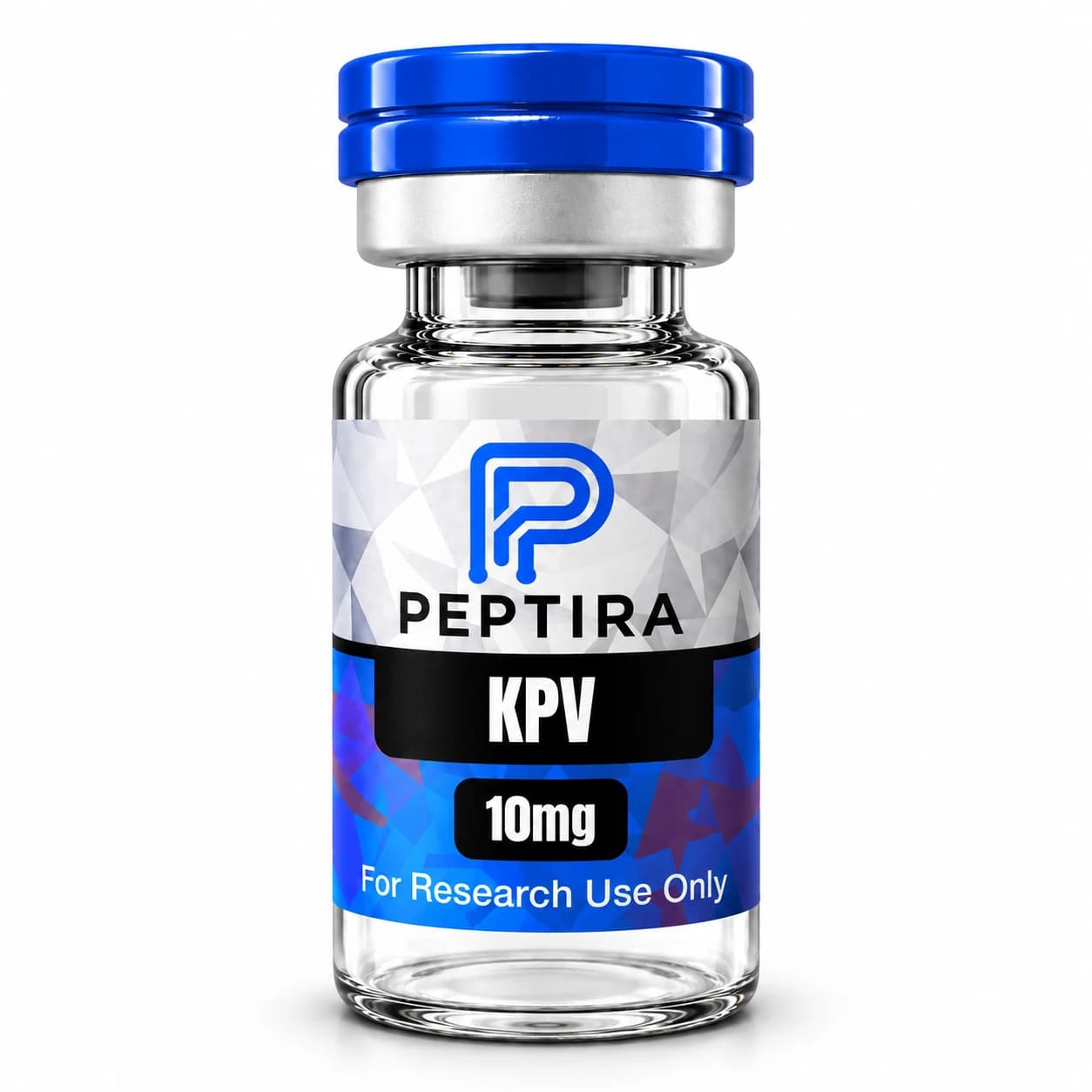
A research facility let us know that a vial of KPV 10mg from lot KPV10-008 turned a light yellow after they reconstituted it. The powder looked normal going in. Once it was in solution it had a yellow tint instead of being clear.
Why we tested it
A color change can come from a few places. It can come from the diluent, from how the vial was kept after mixing, or in some cases from the peptide breaking down. We didn't want to guess. We sent the facility a return packing slip, got that exact vial back, and sent it to Freedom Diagnostics for independent testing.
What was tested
| Sample | The returned vial, already reconstituted (logged by the lab as "yellow liquid") |
| Lot | KPV10-008 |
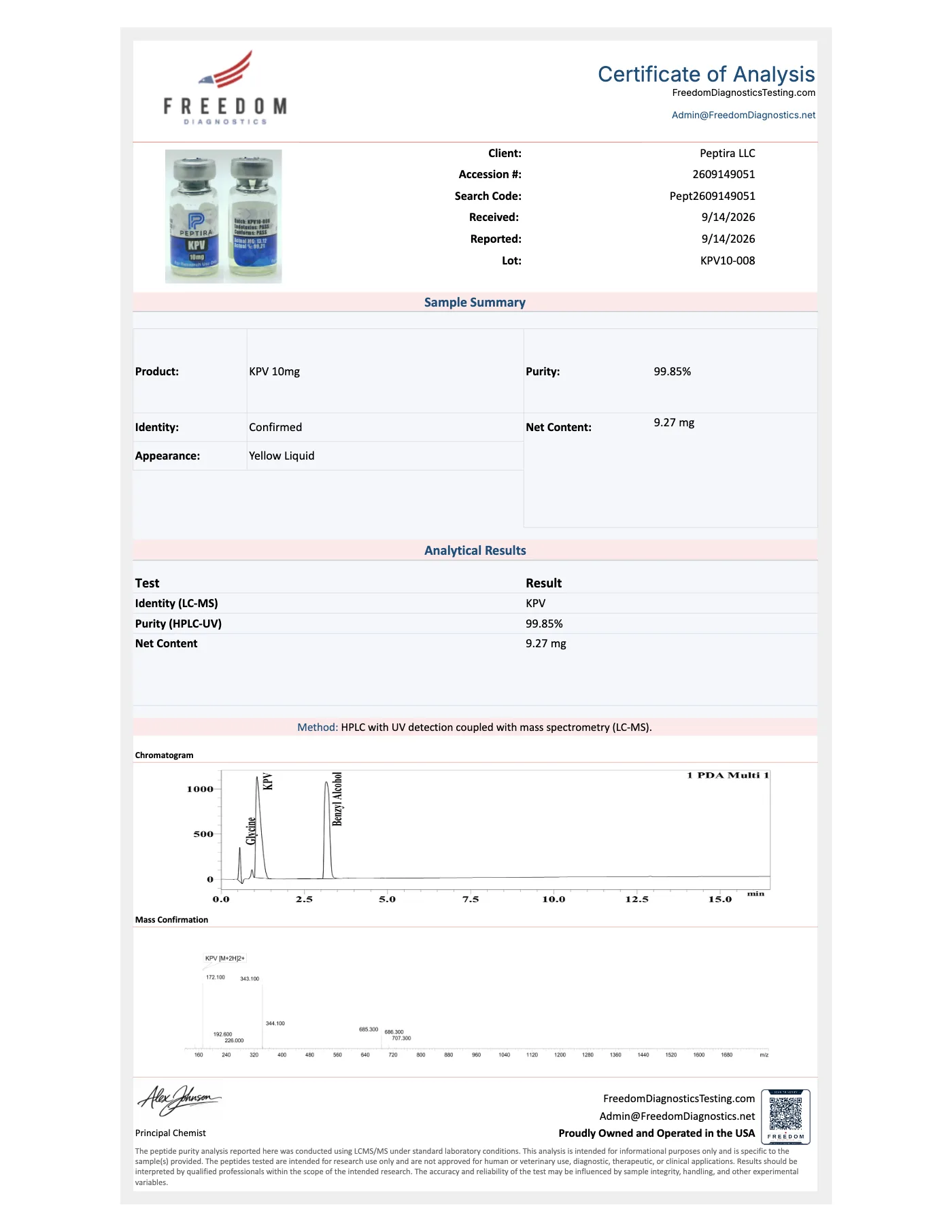
| Lab | Freedom Diagnostics, accession 2609149051 |
| Received and reported | 14 Sep 2026 |
| Tests | Identity (LC-MS), purity (HPLC-UV), net content |
Findings
| Test | Result |
|---|---|
| Identity (LC-MS) | Confirmed, KPV |
| Purity (HPLC-UV) | 99.85% |
| Net content | 9.27 mg |
The chromatogram shows one main KPV peak. Two other peaks are labeled. One is benzyl alcohol, the preservative in bacteriostatic water, which tells us what the vial was mixed with. The other is a small glycine peak. The lab identified both separately and neither is counted against KPV purity. There were no unidentified peaks that would point to the peptide breaking down.
A note on net content: the vial came back already reconstituted and had been handled at the facility, so 9.27 mg is what was in the vial when it reached the lab. It isn't a measure of the original fill. The release COA for this lot is linked on this page.
Why a solution can turn yellow
A light yellow tint in a reconstituted peptide comes up from time to time. These are the usual causes:
- The diluent. Bacteriostatic water contains 0.9% benzyl alcohol. Over time, and faster once a bottle has been opened, kept warm or left in the light, benzyl alcohol slowly oxidizes to benzaldehyde, which can give a faint yellow color. An older or heavily punctured bottle is the most common source.
- Trace reactions in solution. KPV starts with lysine, which carries a free amine group. Amines can react with trace aldehydes, including the benzaldehyde above, and form colored byproducts. It takes very little to tint a solution, far less than would show up as a change in purity.
- Light and temperature after mixing. A reconstituted vial left at room temperature or under strong light is more likely to pick up color than one kept cold and dark.
- Contact with the stopper. Repeated punctures, and liquid sitting against the rubber stopper, can pull small amounts of material into the solution.
- How it's viewed. A small, fairly concentrated volume in a clear vial can look tinted under warm light or against a white background.
What it means
In this case the color didn't come with any change we could measure in the peptide. Identity was confirmed, purity came back at 99.85% (the release test for this lot read 99.21%, which is normal run-to-run variation), and nothing in the chromatogram points to degradation. The most likely source is the diluent or how the vial was kept after mixing, not the peptide itself.
Handling notes for research use
- Use bacteriostatic water that is within its use window, and don't keep an opened bottle for long.
- Keep reconstituted vials refrigerated and out of direct light.
- Write the diluent lot and the date mixed on the vial.
- If you see a color change, contact us. We'll arrange a return and have it tested, the same as we did here.
For research use only. Not for human or veterinary use. This page reports lab results for the samples described here. It is not a claim about any use of the product.